

Email: Tel: 01827 768 286

A straightforward guide to graphic design and what to look out for! – If you’re reading this, chances are you are (or have been) involved with a graphic designer at some stage in your career.
If so, then there is little doubt that you will have experienced every one of the emotions known to man. From confusion (when they ramble on about vector vs raster, CMYK vs RGB and .eps vs .png files). Anxiety (what if they’re too busy playing table football to meet your deadline?). To outright euphoria when they present you with their latest mindblowing concepts.
Graphic design is about crafting solutions to real problems. This requires understanding and for understanding, there must be information.
Of course, a graphic designer (and their work) can often be misunderstood, and we’ve been wondering why. The answer, we’ve decided, is simple…
Designers are problem solvers. But our solutions come from our imagination, unlike many other industries, where products and services can be automated, processed, or algorithm-driven. The design experience is always unique and often very personal too.
We create carefully considered, crafted, analysed and refined until nothing short of perfect.
It’s highly probable that for every piece of creative your graphic designer presents to you, there’ll be another ten that they eliminated earlier in the process.
The problem? While designers are masters in their creative craft, they’re not always so masterful when articulating their thought processes. And the journey we’ve undertaken to reach the result we have for our clients.
In this series of posts, we’ve done our best to rectify that by offering you a brief, hopefully insightful glimpse into our minds. From the reasons we ask all the questions we do, to why (and how) what we do adds value to your business. We’re laying it all bare so that you can see that. While our creative heads may be in the clouds, our business feet are firmly on the ground. No jargon, just a straightforward guide to graphic design.
Are you a client who has provided a rough creative brief, given your designer ’a blank canvas’ but found the final result lacking? Are you a designer who has found yourself working toward what you believed to be your client’s objectives? Only to discover (often too late) that you’ve missed the mark completely? You’re likely to have been missing one crucial ingredient – information.
A saying in life is, ‘You get out what you put in. This is never truer than in graphic design. Graphic design is about crafting solutions to real problems. This requires understanding, and for understanding, there must be information.
Without information (and meaningful insight), designers must inevitably resort to guesswork. That’s not an excellent basis for a successful project. At the same time, they may produce something that looks great (that should be given to a professional). When solving your problem, achieving your objectives or generating results, will it hit the mark?
Hearing “you’re the experts” can be both a blessing and a curse as a graphic designer. Sure, it’s fantastic that a client has faith and trust in your ability, but that’s not a reason to bypass the all-important ‘getting to know you’ phase. That process can sometimes take a little time, but ultimately, it’s well-spent for everyone and can save time and money.
The onus for this process falls to both the designer and the client. At the same time, a client should be willing and able to provide detailed insight into the context, challenges, and preferences. Any designer worth their salt should also have the skills to probe further, leaving no stone unturned.
Of course, what a designer needs to know will vary from project to project. In addition to the mandatory requirements, here’s an insight into some of the questions we’d be asking. (We’ll be unpacking these in more detail in our forthcoming blog post, ‘What makes you tick’, so be sure to check back!)
Far from being a comprehensive guide to rigid adherence, questions like these form a basis for successful projects and client relationships.
At best, you could end up with something that looks great but achieves nothing. At worst, you could create confusion, undo previous successes, and potentially damage your brand. If that’s not worth a detailed conversation upfront, we don’t know what is…
Design is the intermediary between information and understanding.
Hans Hofmann
In this section, we’ll expand on that to provide more detailed insights into what designers need to know to ensure your creative project is a success.
First and foremost, a designer needs to understand why a particular piece of design is required. Have you seen a decline in sales? Do you have a new product or service to launch? Way before, a designer should be putting ‘pen to paper’ (or mouse to Mac). They need to have a solid grasp of a project’s context and understand where it sits within the longer-term strategy and objectives. This ‘bigger picture’ insight is an essential foundation. In our experience, it fuels the creative process and allows for more imaginative thinking.
Beyond this, of course, there are many additional factors to consider. Answers to which all contribute to making sure that the creative delivers the desired results…
The designer will need to know some basics of the campaign. What has come before, what will be running alongside, and what will come after?
Not only is this critical, but it also provides insight into established branding and visual styles. It also helps us understand what stage your customer may be at in the buying process. Plus, how this particular piece of creativity should perform.
The more clearly you can define your target market, the more effectively a designer can work within their motivations. There is a well-known saying: ‘you can’t be all things to all people’, and it’s true in design. If you have evidence to support why previous campaigns have (or haven’t) worked well with your target market. That information is precious.
The design should prompt a reaction, generate a specific response, or encourage a particular action. Without knowing what response you’d like or what you think ‘success’ looks like, how can your designer hit the nail on the head? If you’re measuring success based on an uplift in sales revenue. But your designer is basing it on the increase in brand awareness or social engagement. You may not be satisfied with the results.
In some instances, your business may face obstacles or challenges. Your designer will need to bear this in mind during the creative process. These may be linked to the competitive environment, broader market factors, or even your business. Be they small or significant – we need to know about them.
All businesses have something that sets them apart from their competition. But not everyone is excellent at identifying or summarising what that is. You must understand your key messages and selling points. This is so your designer understands them too and can convey them in your creative.
Do you have a ballpark budget in mind? If so, your designer needs to know. This isn’t so we can go away and start planning our next holiday on the proceeds! It’s so that we understand the full scope and feasibility of what you’re asking for. We can then develop viable suggestions that will deliver against both your brief and your budget.
As we’ve already established. Information sharing is at the heart of that relationship when working with a designer.
If you fall into the trap of not providing all the facts, you want your designer to have complete creative freedom. (or if you want them to prove their worth) You’re doing yourself (and them) an injustice. Sure, you may not want to stifle the creativity itself. But not providing a comprehensive overview of that creative purpose and scope may mean you don’t get the results you’re hoping for.
Thinking about design is hard, but not thinking about it can be disastrous.
Ralph Caplan
As we discussed in our previous guide to graphic design posts. Graphic design has become democratised, so when selecting the design agency for you, there is often no shortage of choice. Of course, making the right choice can be somewhat more complicated. In our view, in addition to creativity (which should be a given), many other things are worth looking out for, many of which do not come from a free pitching process.
We understand that it may be tempting to put multiple agencies to the test as a client before selecting one. Still, the ‘free pitch’ value has long been questioned, and for good reason. Despite its allure, this old industry habit is not just wasteful of agency resources; it’s also dangerous for the client. In short, everyone gets the short end of the stick when it comes to free creative pitching.
Amongst other things, the pitching process can, in many cases. Completely omit those necessary ‘getting to know you’ stages that we’ve previously talked about and gloss over the value your designer has the potential to add…
“The ‘free pitch’ has long been questioned for a good reason.”
Design agencies sell an expert problem-solving service. When you hire a professional team, you’re getting a creative team. The creative team will dive into your business, investigate problems, understand the stakeholders, and collaborate with you to fine-tune a solution that considers all of these. Much of what makes a solution successful is the insights that come along the way throughout this journey.
With the pitching process, however. All of this is generally thrown out of the window. This will favour a skeletal brief—some swift guesswork by the agency, capped by a theatrical talent show.
The result? A surface-level solution that might tick all the boxes in a creative pitch but has ultimately cheated you of the full value of the investigative design process.
Even though they’d likely love to work with you, some agencies may decline to participate in your pitch, leaving you with a weakened field. Here’s the reason why.
As an agency, we’ll be the first to admit that speculative work is time and cost-intensive and can be a massive drain on resources. Inevitably, an agency can only invest a certain amount into your pitch if they are busy delivering results for their existing (paying) clients.
This means that you won’t get the full benefit of working with them – you’ll get a watered-down solution that will, in most cases, be ‘style over substance’. While some agencies may be happy with that, there are those amongst us who certainly wouldn’t be – and you shouldn’t be.
It may feel like there is no viable alternative for finding your designer, but that is not the case. If you want to see an agency at its best (and eliminate the chance of flimsy, poorly considered creative), invite them to give a credentials presentation.
While this is a perfect chance to get to know the agency and see examples of their success with people, it’s an opportunity to get to terms with their methods. You can then decide if they will be a good match for you and, of course, have insight into their creative abilities.
“Graphic design is about crafting solutions to real problems. This requires understanding, and for understanding, there must be information.”
When meeting with an agency, ensure all decision-makers are in the room. This may include not only senior staff members but also those who will work directly with the agency to ensure the project is delivered effectively. Those people have to work with the agency, so rapport is essential. It’s far better for all the key stakeholders to watch the presentations in their entirety and ask their questions.
When evaluating an agency, try not to put too much weight on a specific design concept presented, but instead focus on the bigger picture. It’s more important that you can see that their work is of high quality. They can innovate and demonstrate understanding.
Not all agencies will be a good fit for your business’s personality. Keep an eye on cultural fit and attitude, and don’t underestimate the power of that hard-to-define “chemistry.” (Yep, it’s a bit like dating.) They should present some fantastic design work, but the design can be changed – the team delivering them can’t.
Use the designs presented as a window into each agency’s process. What research did they conduct? How did they get to the solution? Does the agency have a formal way of looping the client into the process from start to finish? This is d a great indication of whether you could work well with the agency and build a partnership that works.
Ultimately, this is just the beginning (hopefully!) of a long creative problem-solving process. Using it to understand how an agency works and getting a feel for working together, a more successful union is on the cards. Treat it like a quick competition, and you’ll get what you’ve paid for.
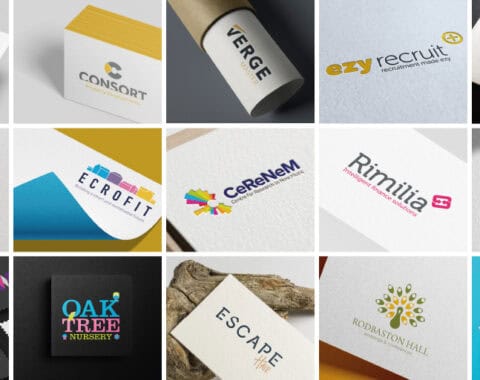
Let's get straight to it. Design isn't just about making things look pretty (though we're rather good at that).
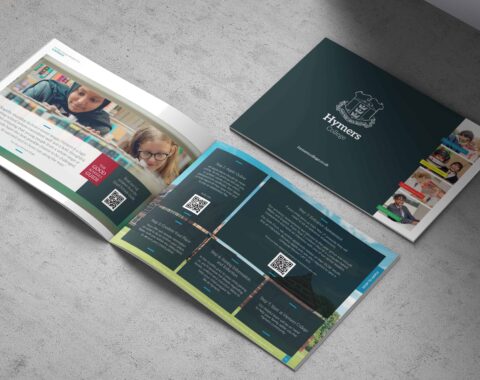
Let's get straight to it. Design isn't just about making things look pretty (though we're rather good at that).